
1. The Shift from Clicks to Conversations
For years, digital products were designed around screens, buttons, menus, and forms. Users were expected to learn how systems worked before they could complete even simple tasks. Whether it was booking an appointment, contacting support, or managing subscriptions, every interaction depended on navigating software manually.
That behaviour is changing rapidly.
Modern users no longer want to move through complex interfaces or switch across multiple screens to complete basic tasks. They expect systems to respond instantly, understand intent naturally, and execute actions in real time. A simple instruction like:
“Schedule a meeting for tomorrow evening.”
now represents an entire workflow powered by conversational AI and intelligent automation systems like Voice Rabbitt AI.
This shift from interface-driven interaction to conversation-driven interaction is becoming one of the most important transitions in modern software infrastructure, and at Voice Rabbitt AI, we are helping businesses accelerate this transformation through scalable AI voice agents and real-time conversational workflow automation.
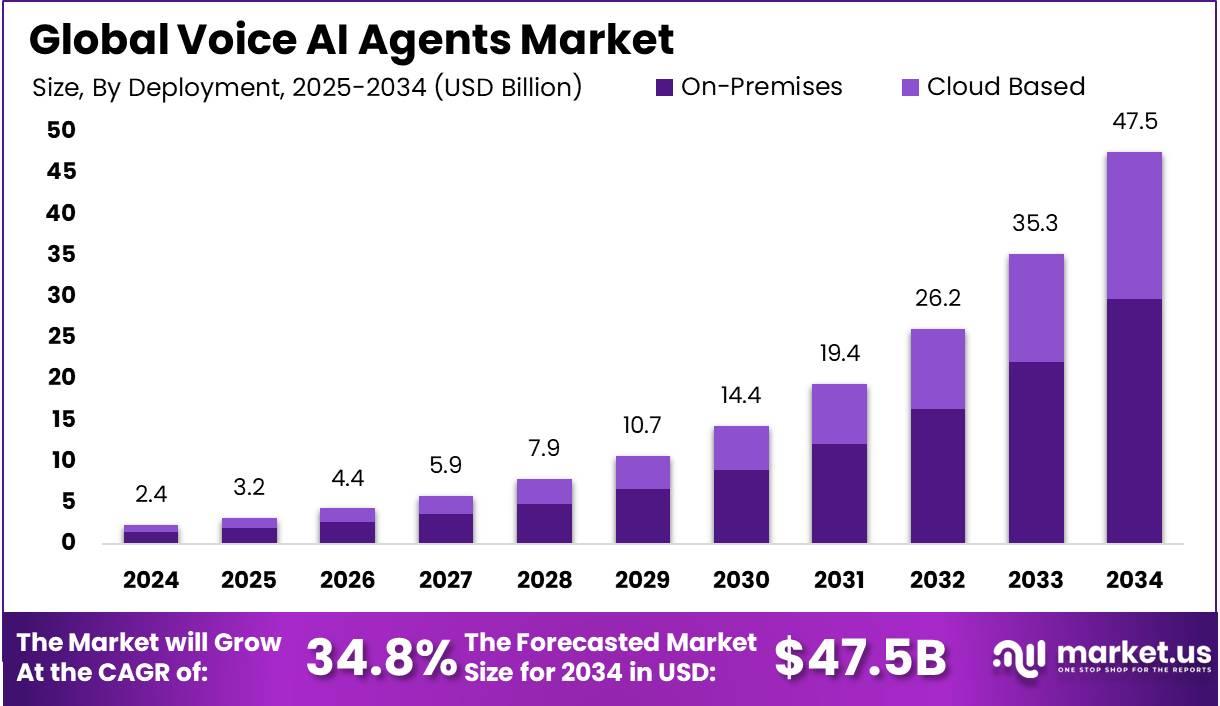
The numbers already reflect that shift. According to Gartner Research,, by 2028, at least 70% of customers are expected to begin their customer service journey through conversational AI interfaces. Gartner also predicts that conversational AI technologies could reduce global customer service labor costs by nearly $80 billion by 2026, as enterprises increasingly automate repetitive support interactions using AI-driven systems.
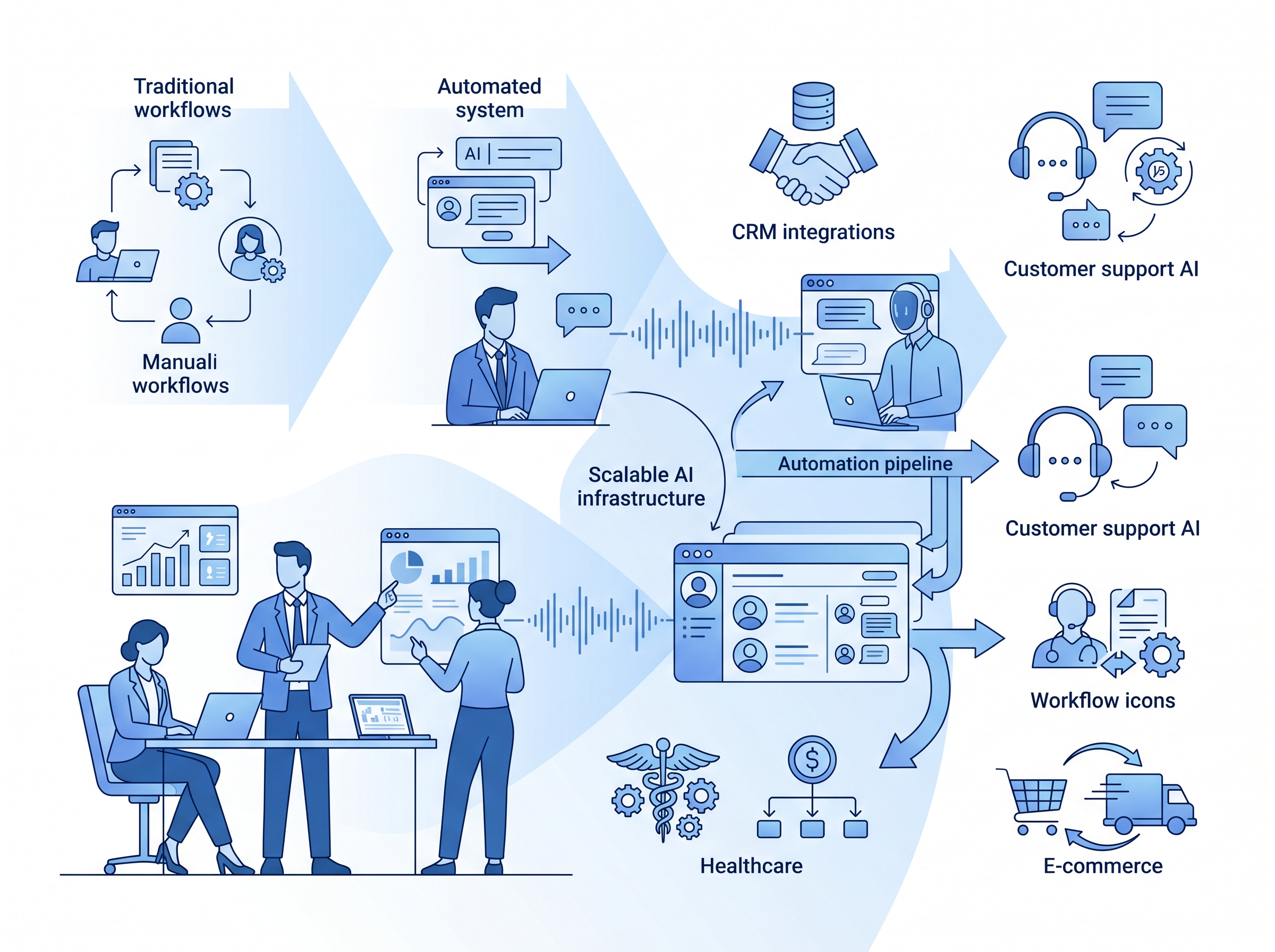
This adoption is being driven by a combination of operational pressure and changing user behavior. Businesses are handling significantly larger volumes of customer interaction while users expect real-time responses across every digital platform. Traditional support systems struggle to scale efficiently because they rely heavily on manual workflows and human-operated execution layers.
At Voice Rabbitt AI, we help businesses bridge this operational gap through AI-powered conversational infrastructure capable of handling communication, workflow execution, scheduling, and customer interaction in real time.
AI voice agents are emerging as the infrastructure layer solving this problem.
Unlike traditional IVR systems or scripted chatbots, modern conversational AI systems like Voice Rabbitt AI can understand natural language, maintain conversational context, and execute workflows dynamically. Instead of forcing users to navigate rigid menus or predefined flows, these systems interpret intent directly and trigger actions automatically across connected platforms and enterprise systems.
The momentum behind this transition is accelerating rapidly. A Gartner survey published in 2024 found that 85% of customer service leaders are already exploring or piloting customer-facing conversational AI solutions, including voice-based AI systems. Another Gartner forecast suggests that by 2029, agentic AI systems could autonomously resolve up to 80% of common customer service issues without human intervention, potentially reducing operational costs by 30%.
This is why voice AI is becoming more than just a support feature.
It is evolving into a new interaction layer for modern digital infrastructure — one where conversations themselves become workflows, and where Voice Rabbitt AI enables businesses to automate customer interaction, backend execution, and operational communication through intelligent AI voice systems.
2. Why Businesses Are Adopting AI Voice Agents
The adoption of AI voice agents is being driven by a simple reality: businesses are handling more customer interaction than traditional support systems can efficiently manage.
Modern users expect instant responses, continuous availability, and frictionless support experiences across every digital platform. Traditional systems struggle to meet these expectations because they rely heavily on human-operated workflows that become expensive and difficult to scale over time.
AI voice systems solve this differently. They can handle thousands of simultaneous interactions, automate repetitive communication workflows, and operate continuously without downtime. This allows businesses to improve response times while reducing operational pressure.
At Voice Rabbitt AI, we provide scalable conversational AI infrastructure that helps businesses automate customer support, appointment scheduling, workflow execution, inbound and outbound communication, and real-time operational tasks through AI voice agents.
According to Gartner, conversational AI is rapidly becoming a primary customer interaction channel as enterprises move toward real-time, automated support infrastructure.
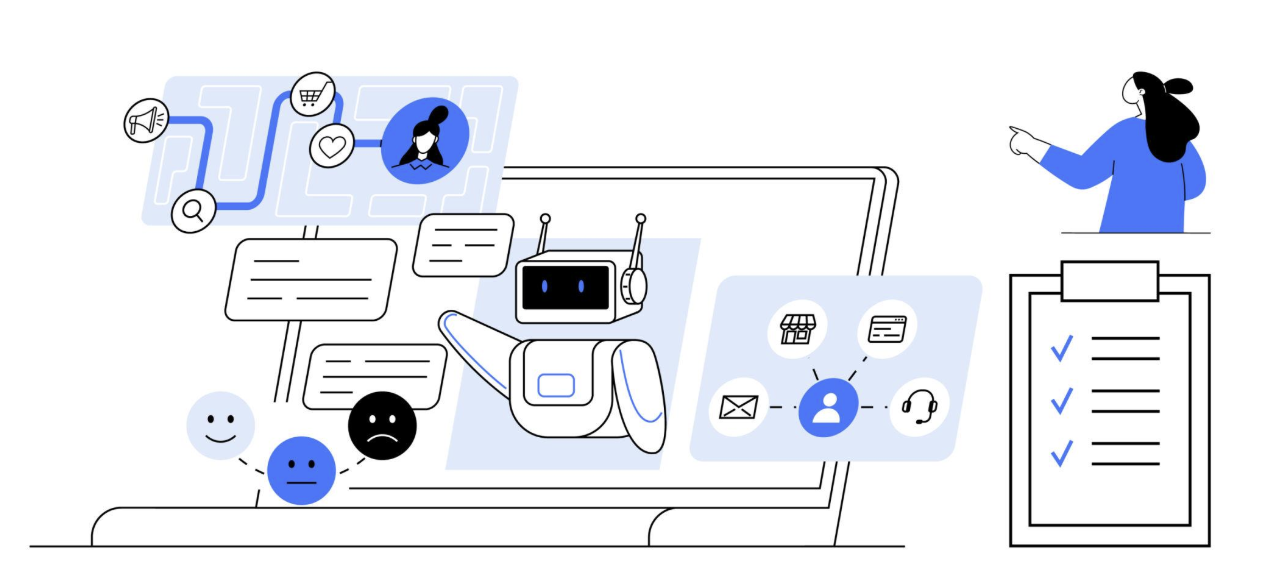
This shift is already visible across customer support, healthcare, banking, SaaS, and e-commerce platforms where communication bottlenecks directly impact operational efficiency. Voice Rabbitt AI is helping businesses across these industries reduce friction, automate repetitive workflows, and improve conversational customer experiences through enterprise AI voice automation.
3. How AI Voice Agents Actually Work
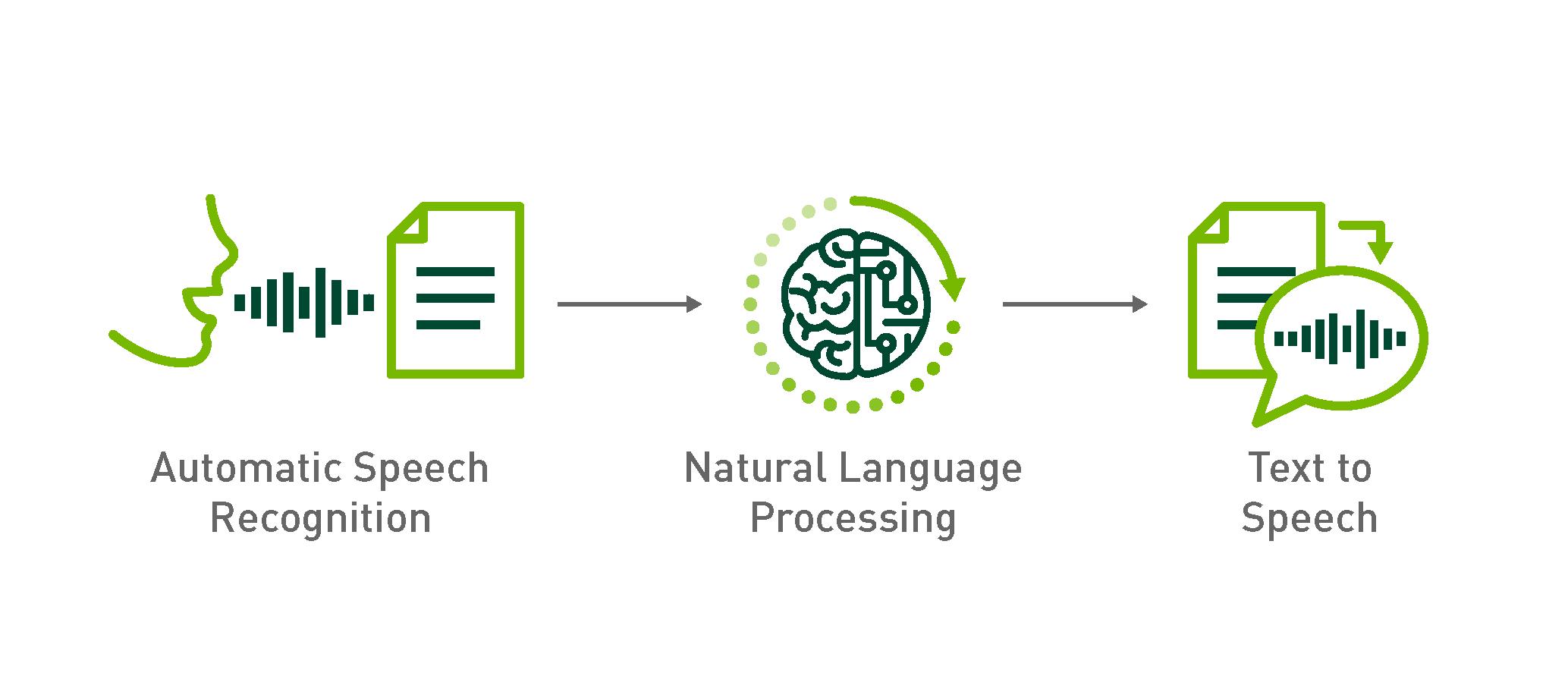
AI voice agents operate through a real-time conversational pipeline that combines speech recognition, language understanding, decision-making, and workflow execution into a single system.
When a user speaks, the system first converts voice into structured text using Automatic Speech Recognition (ASR) technology. Natural language models then analyze the conversation to identify intent, understand context, and extract key information such as names, dates, account details, or requests.
At Voice Rabbitt AI, our conversational AI systems are designed to process user intent in real time while integrating directly with enterprise infrastructure and operational workflows.
Once intent is identified, the AI system connects with backend infrastructure including CRM platforms, scheduling systems, APIs, payment gateways, or enterprise databases to execute the required action automatically.
After the workflow is completed, the system generates a contextual response and converts it back into natural speech using Text-to-Speech (TTS) technology. The entire interaction happens within seconds, allowing users to communicate naturally while the AI handles execution in the background.
This architecture is fundamentally different from traditional IVR systems that depend on rigid menu structures and predefined call flows. Modern conversational AI systems like Voice Rabbitt AI operate dynamically, enabling real-time interaction that feels significantly more natural and human-like while automating backend workflows simultaneously.
According to research from McKinsey & Company, enterprises are increasingly investing in AI-driven automation systems capable of handling communication-heavy workflows with minimal human intervention. Similarly, Gartner Research highlights conversational AI as one of the fastest-growing enterprise automation layers because of its ability to improve operational scalability while reducing response times.
The core workflow behind most AI voice systems typically follows this structure:
Voice Input → Speech Recognition → Intent Detection → Decision Engine → API / Workflow Execution → Natural Voice Response
This is what allows modern AI voice agents to move beyond scripted responses and function as real-time conversational infrastructure for customer support, healthcare, banking, SaaS, and enterprise operations.
At Voice Rabbitt AI, we use this conversational infrastructure model to help businesses automate operational communication and transform conversations into executable workflows.
4. Where Voice AI Is Already Making an Impact
AI voice agents are already being deployed across industries where communication and execution intersect.
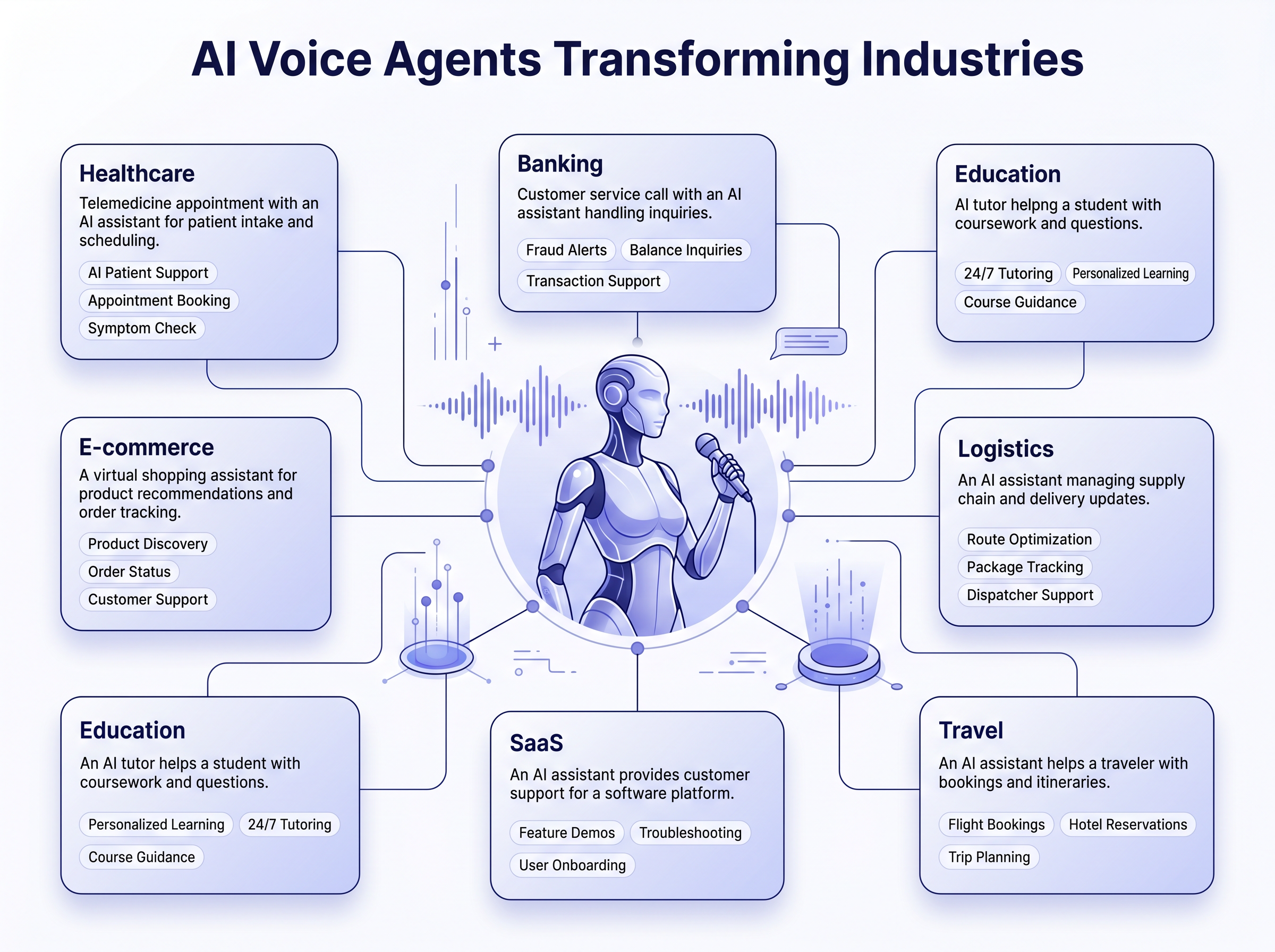
In healthcare, conversational systems automate appointment scheduling, patient reminders, and administrative communication. Voice Rabbitt AI helps healthcare organizations reduce administrative workload while improving patient interaction and operational efficiency.
In e-commerce, voice AI simplifies order tracking, customer support, and conversational shopping experiences. Voice Rabbitt AI enables e-commerce businesses to automate customer communication while improving response speed and engagement.
Banking systems are adopting conversational AI for transaction support, account queries, and fraud alerts, while SaaS companies are integrating voice automation into onboarding and customer support workflows.
Voice Rabbitt AI helps enterprises across banking, SaaS, logistics, hospitality, education, and customer support environments automate repetitive workflows, manage customer interaction, and build scalable conversational infrastructure.
According to industry adoption trends, enterprises are increasingly moving toward voice-first systems because they improve operational scalability while reducing interaction friction.
5. Voice Rabbitt AI and the Rise of Conversational Infrastructure
Voice Rabbitt AI represents a broader shift toward conversational infrastructure, where communication and workflow execution happen together in real time.
Instead of functioning as standalone voice assistants, modern AI voice systems are becoming operational layers integrated directly into business infrastructure. Conversations are no longer isolated interactions — they are triggers for real-time workflows across customer support systems, CRM platforms, scheduling tools, APIs, and enterprise databases.
Voice Rabbitt AI enables businesses to deploy AI voice agents capable of handling customer interaction, automating repetitive workflows, managing scheduling operations, and executing backend actions through natural conversation.
When a customer speaks, the Voice Rabbitt AI system can instantly process intent, connect with operational systems, retrieve relevant data, and complete tasks automatically without requiring manual intervention.
At Voice Rabbitt AI, we focus on bridging the gap between communication and execution by transforming conversations into scalable operational workflows powered by conversational AI infrastructure.
This transforms voice AI from a communication tool into scalable conversational infrastructure capable of supporting real-time business operations across healthcare, SaaS, e-commerce, banking, logistics, hospitality, and enterprise environments.
6. Conclusion
AI voice agents are redefining how users interact with digital systems by replacing manual workflows with real-time conversational execution.
As businesses continue moving toward automation, scalability, and instant interaction, conversational AI is becoming a foundational layer of modern digital infrastructure.
At Voice Rabbitt AI, we are helping businesses build intelligent conversational infrastructure capable of automating communication, workflow execution, customer interaction, and operational processes through enterprise-grade AI voice systems.
The transition from clicks to conversations is no longer experimental — it is actively reshaping how systems are designed, automated, and experienced.
7. Frequently Asked Questions
What is Voice Rabbitt AI?
Voice Rabbitt AI is a conversational AI platform that enables businesses to deploy intelligent AI voice agents capable of handling customer interaction, workflow automation, scheduling, backend execution, and real-time operational tasks through natural conversation.
How do Voice Rabbitt AI voice agents work?
Voice Rabbitt AI voice agents use conversational AI, speech recognition, natural language understanding, and workflow automation to understand user intent, process requests, connect with backend systems, and execute actions automatically in real time.
Which industries can use Voice Rabbitt AI?
Voice Rabbitt AI can be deployed across healthcare, banking, e-commerce, SaaS, logistics, education, hospitality, travel, insurance, and customer support environments where communication-heavy workflows require scalable automation.
How is Voice Rabbitt AI different from traditional chatbots or IVR systems?
Unlike traditional chatbots or IVR systems that rely on scripted flows and menu-based interaction, Voice Rabbitt AI enables natural, human-like conversation while dynamically executing workflows across connected business systems and enterprise infrastructure.
Can Voice Rabbitt AI integrate with existing business infrastructure?
Yes. Voice Rabbitt AI can integrate with CRM platforms, scheduling systems, APIs, customer support tools, databases, and enterprise workflows to automate operational tasks through conversational interaction.
Why are businesses adopting Voice Rabbitt AI agents?
Businesses are adopting Voice Rabbitt AI to reduce operational workload, improve customer response times, automate repetitive communication workflows, scale customer interaction efficiently, and build conversational infrastructure for real-time business operations.