
1. Introduction
Healthcare has evolved rapidly over the last decade. Hospitals and clinics now use advanced diagnostic systems, electronic medical records, AI-assisted workflows, and digital patient platforms. But despite all this innovation, one critical part of healthcare still remains outdated: communication.
Every day, patients try to contact healthcare providers for appointments, reports, follow-ups, prescription queries, or urgent concerns. Many of those calls go unanswered. Not because hospitals do not care, but because traditional phone systems and overloaded staff cannot handle the growing volume of patient communication efficiently. These missed interactions are rarely tracked, yet they directly impact patient trust, retention, and even treatment outcomes.
AI voice agents are emerging as a solution to this overlooked problem. By providing instant, intelligent, and always-available communication, they are transforming how healthcare organizations interact with patients.
2. The Hidden Cost of Missed Calls
A patient missed their cancer screening last year. Not because they forgot or ignored medical advice, but because they called multiple times and nobody answered. The hospital never realized that patient stopped trying.
This situation is far more common than most healthcare organizations realize. Missed calls do not appear in operational dashboards or performance reports. There is no alert showing how many patients gave up after waiting on hold or being sent to voicemail repeatedly. Yet these silent failures happen every single day across hospitals and clinics still operating on communication systems designed decades ago.
Patients are not always leaving because of poor treatment quality. Often, they leave because reaching someone feels difficult and exhausting. In healthcare, communication delays can quietly become care delays.
3. Why Traditional Healthcare Communication Is Failing
Most healthcare systems still rely heavily on manual communication processes. Front desk teams handle appointment scheduling, follow-ups, inquiries, cancellations, and patient coordination simultaneously. During peak hours, call volumes increase beyond what staff can realistically manage.
Traditional IVR systems make the situation worse by forcing patients through long menu options that rarely solve their problems quickly. Patients already dealing with stress or health concerns become frustrated when simple tasks require repeated calls and long wait times.
Unlike industries such as banking, e-commerce, or logistics that have adopted real-time support systems, healthcare communication infrastructure has struggled to modernize at the same pace. As patient expectations continue rising, outdated systems create operational pressure for providers and poor experiences for patients.
4. What Are AI Voice Agents in Healthcare
AI voice agents are intelligent conversational systems designed to manage patient communication through natural voice interactions. Unlike traditional automated phone systems that depend on fixed responses or keypad inputs, modern voice agents understand natural language and respond conversationally.
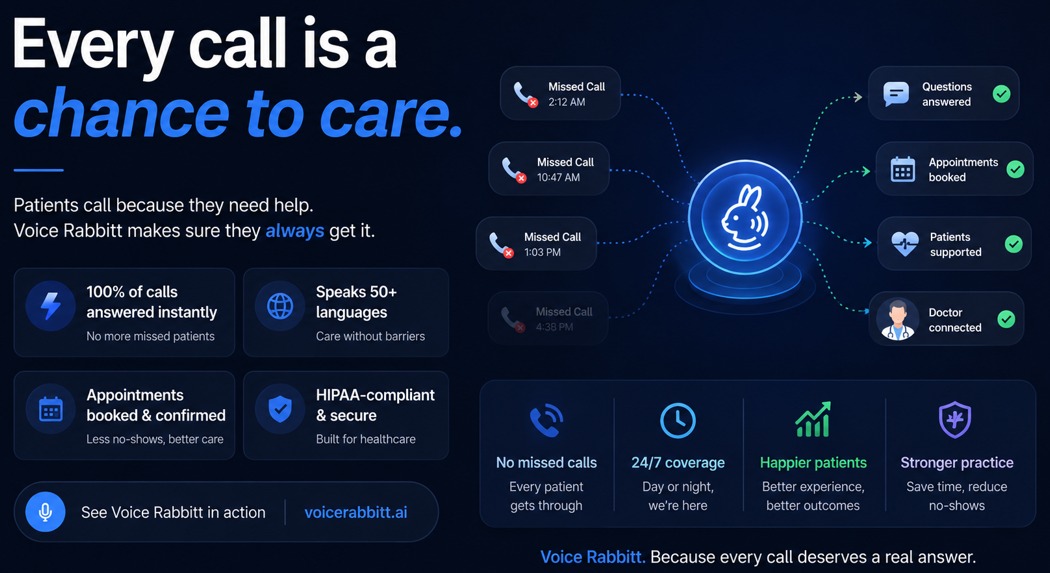
When patients call, the system can recognize intent, process requests, provide answers, and perform actions instantly. These systems can schedule appointments, handle FAQs, confirm visits, send reminders, manage follow-ups, and route urgent cases appropriately.
The interaction feels more natural because patients speak normally instead of navigating rigid phone menus. Behind the scenes, technologies such as speech recognition, natural language processing, and AI decision systems work together to understand requests and execute tasks in real time.
5. Why Instant Patient Communication Matters
Healthcare is one of the few industries where delayed communication can directly impact outcomes. Patients calling hospitals are often anxious, confused, or seeking urgent information. Long hold times and unanswered calls increase frustration and reduce trust.
Modern patients expect immediate responses regardless of the time of day. They do not want to wait until the next business morning just to confirm an appointment or ask a basic question. AI voice agents solve this by providing consistent 24/7 availability.
Whether a patient calls at 2 PM or 2 AM, the experience remains the same. Every call gets answered instantly. Every interaction receives attention. And when human intervention becomes necessary, healthcare staff receive the complete conversation context before joining the call.
This creates a smoother and more reliable patient experience while reducing communication gaps.
6. Operational Benefits for Hospitals and Clinics
Healthcare organizations manage enormous volumes of repetitive communication daily. Administrative teams spend significant time answering routine questions, scheduling appointments, handling cancellations, and managing follow-ups.
AI voice agents reduce this operational burden by automating repetitive interactions while maintaining service quality and consistency. This allows staff to focus more on complex patient needs instead of managing overwhelming call volumes.
The operational benefits include reduced missed appointments, faster response times, improved patient engagement, lower administrative workload, and increased scalability. Hospitals can manage larger communication volumes without proportionally increasing staffing costs.
More importantly, patients no longer feel ignored or disconnected from their healthcare providers.
7. Voice AI as the New Healthcare Infrastructure
Voice AI is gradually becoming essential infrastructure for modern healthcare operations. Communication can no longer depend entirely on limited staff availability or outdated phone systems.
As healthcare demand continues increasing, organizations need systems capable of handling patient interactions continuously and efficiently. AI voice agents provide a scalable communication layer that ensures patients always receive a response, even during high-volume periods.
The goal is not to replace healthcare professionals. The goal is to remove communication bottlenecks that prevent patients from accessing care efficiently.
Hospitals that adopt intelligent communication systems early are likely to improve both operational efficiency and patient satisfaction significantly over the coming years.
8. The Future of Patient Interaction
The future of healthcare communication will become increasingly conversational and AI-driven. Voice agents will evolve from handling basic requests to managing more complex patient journeys integrated directly with healthcare systems.
These systems will eventually understand patient history, context, urgency, and preferences more accurately, enabling highly personalized interactions. Communication will become faster, smoother, and far more accessible than traditional systems allow today.
As AI continues advancing, patients will expect healthcare interactions to feel as seamless as every other modern digital experience. Organizations unable to meet those expectations may struggle to retain patient trust in the long term.
9. Conclusion
Healthcare organizations have invested heavily in improving treatment systems, but communication failures still remain one of the industry’s biggest blind spots.
Every unanswered call represents more than operational inefficiency. It represents a patient trying to reach someone and failing.
AI voice agents solve a problem many hospitals do not even measure. They ensure every patient interaction is acknowledged, every request receives attention, and no patient quietly stops trying because nobody answered the phone.
Because sometimes the difference between a completed treatment and a missed one starts with a single unanswered call.